


Views: 0 Author: Site Editor Publish Time: 2025-12-18 Origin: Site


The enduring appeal of jade bracelets spans thousands of years, especially in East Asian cultures where jade represents virtue, harmony, and spiritual refinement. Among all jade varieties, Hetian jade (also known as Hetian nephrite) holds a uniquely respected status due to its historical legacy, cultural symbolism, and distinctive material qualities. However, with the increasing popularity of jade jewelry, the market has also seen a surge in imitations, treated stones, and misrepresented materials.
For buyers and collectors, understanding how to tell if a jade bracelet is real—particularly genuine Hetian jade—is essential. This article provides a comprehensive, industry-accurate guide to identifying authentic jade bracelets, correcting common misconceptions, and explaining the true value and meaning of Hetian jade from a professional perspective.
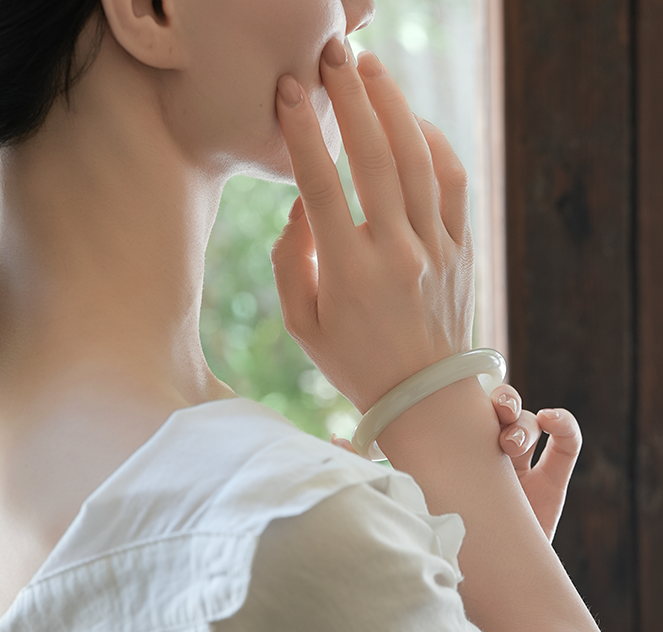
In gemological terms, “jade” refers to a narrow category of minerals, primarily nephrite. Hetian jade belongs to this nephrite family and has been used continuously in China for over 3,000 years. Unlike modern commercial classifications that emphasize brightness or transparency, traditional jade culture values texture, structure, and inner quality.
Authentic Hetian jade is known for the following traits:
Fine, dense structure with tightly interwoven fibers
Soft, oily luster rather than a glassy shine
Excellent toughness and durability, making it ideal for bracelets
Natural, understated color tones rather than overly vivid hues
Common colors of Hetian jade include:
White (sheep-fat jade)
Light green
Cyan (qing jade)
Yellowish or brownish tones caused by natural oxidation
Unlike commercial misunderstandings, high translucency or bright emerald green color is not the primary indicator of quality for Hetian jade. Instead, connoisseurs prioritize texture, uniformity, and tactile feel.
Before discussing identification methods, it is important to correct several widespread errors found in non-professional jade articles:
“The brighter the green, the better the jade” – This is not true for Hetian jade. Overly bright green often indicates dyeing or unrelated materials.
“Perfect clarity means higher value” – Natural Hetian jade frequently contains cotton-like inclusions, which are normal and acceptable.
“All jade scratches glass easily” – Hardness alone is not a reliable identification standard; structure and toughness matter more.
Correcting these misconceptions helps buyers avoid misjudging authentic Hetian jade bracelets.
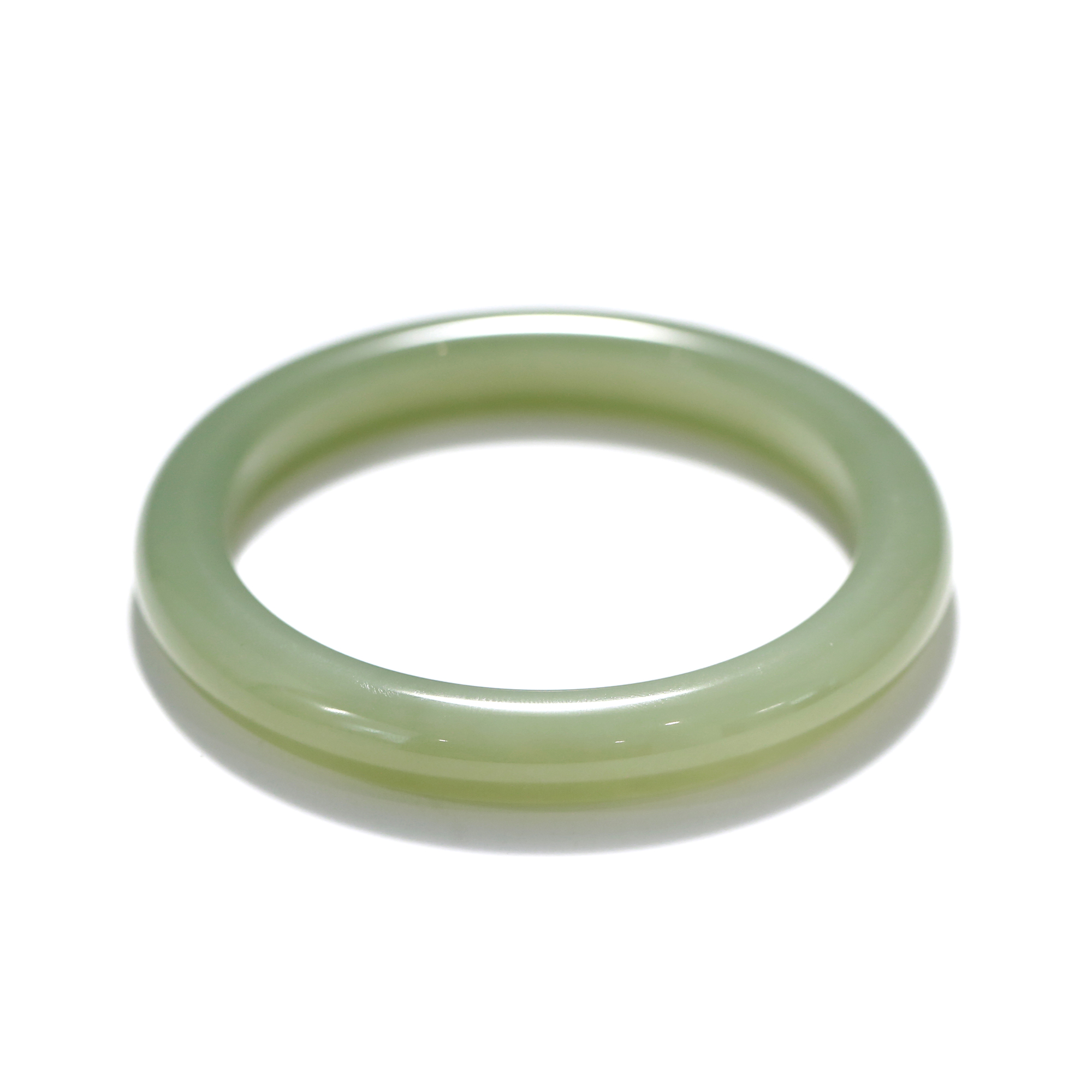
A genuine Hetian jade bracelet will display a soft, restrained elegance rather than flashy brilliance.
What to look for:
Even coloration with natural transitions
Subtle internal “cotton” or cloud-like textures
A surface that appears smooth and refined, not overly glossy
Artificial stones often look “too perfect,” with flat color distribution or plastic-like brightness.
One of the most reliable indicators of real Hetian jade is its unique tactile sensation.
When touched:
The surface feels smooth and slightly “oily”
The stone warms gradually when worn
It feels comfortable and dense in the hand
Imitation materials often feel either cold and glassy or unnaturally light.
Hetian jade has a high density, giving the bracelet a solid, reassuring weight relative to its size. While this method requires experience, seasoned buyers can often distinguish jade from substitutes simply by handling it.
Lightweight bracelets with similar appearance should be treated cautiously.
When gently tapped with another jade piece or a hard object, real Hetian jade produces a clear, resonant sound rather than a dull thud. This traditional test reflects the stone’s compact fibrous structure.
Hetian jade is tough, but scratch tests should be performed carefully and preferably by professionals.
Key points:
Genuine jade does not scratch easily with common metals
However, improper testing can damage polished surfaces
Scratch resistance alone is not sufficient proof of authenticity
This test should be supplementary, not decisive.
This laboratory method is widely used to:
Confirm nephrite composition
Detect resin impregnation or polymer treatments
Identify dyed or chemically altered materials
Under magnification, authentic Hetian jade reveals a fibrous, felt-like crystal structure, which differs significantly from glass, quartz, or synthetic composites.
For high-value jade bracelets, buyers should request certification from recognized gemological institutions. A proper report will clearly identify the material as nephrite (Hetian jade) and disclose any treatments.
Beyond material authenticity, Hetian jade carries profound symbolic meaning.
Traditionally, jade bracelets represent:
Moral integrity and self-cultivation
Protection and harmony
Longevity and inner peace
A white Hetian jade bracelet is often associated with purity and restraint, while green or cyan tones symbolize balance and vitality. These meanings are deeply rooted in Chinese philosophy and are inseparable from the value of genuine Hetian jade.
Identifying a real jade bracelet—especially authentic Hetian jade—requires more than relying on color or price. True evaluation combines visual judgment, tactile experience, material knowledge, and professional verification.
As the market becomes increasingly complex, buyers are strongly advised to:
Focus on reputable suppliers specializing in Hetian jade
Avoid exaggerated claims about color or rarity
Seek transparency regarding material origin and treatment
By understanding the true characteristics and cultural significance of Hetian jade, buyers can make informed decisions and appreciate jade bracelets not just as jewelry, but as enduring cultural artifacts.


