


Views: 0 Author: Site Editor Publish Time: 2026-08-31 Origin: Site


Investing in authentic jade requires balancing aesthetic preference and practical wearability. You want a piece reflecting timeless elegance. It must also fit seamlessly into your daily life. Buyers frequently struggle between two distinct options. They weigh the traditional appeal of a rigid piece against flexible, modern comfort. The jade bangle vs bracelet debate often dominates jewelry discussions. Making the wrong choice can frustrate you. A beautiful gemstone heirloom might stay locked in a jewelry box rather than enjoyed daily.
This guide evaluates both options extensively. We review daily wearability, material value, sizing constraints, and lifestyle compatibility. You will learn how raw material yield directly dictates market pricing. We also cover essential measuring techniques for rigid structures. Our goal is clear. We provide actionable insights to help you finalize a confident purchasing decision.
Structural Difference: A jade bangle is a continuous, rigid loop carved from a single stone, while a jade bracelet consists of flexible beads or links connected by string or metal.
Sizing Rigidity: Bangles require exact knuckle and wrist measurements; bracelets offer adjustable, risk-free sizing.
Material Value: Bangles demand large, flawless blocks of rough jade, making them generally more expensive than bead bracelets of comparable quality.
Lifestyle Compatibility: Flexible bracelets are highly practical for desk work and active lifestyles, whereas solid bangles require mindful wear to avoid impact damage.
Understanding the fundamental architecture of these two jewelry styles remains critical. Each design requires drastically different manufacturing processes. The resulting pieces offer entirely distinct wearability profiles.
Jewelers carve a solid jade bangle from a singular block of jadeite or nephrite. This continuous loop features zero structural give. It cannot bend, stretch, or adapt to your wrist. Manufacturers craft several distinct profiles to accommodate different preferences. The standard round shape provides a classic, symmetrical look. The "Peace" or Ping An style features a flat inner band. This flat interior maximizes skin contact and comfort. Alternatively, the "Guifei" style utilizes an oval shape. This oval contour closely mimics the natural slope of a human wrist. Bangles offer a seamless, traditional aesthetic. However, their rigid nature requires precise sizing.
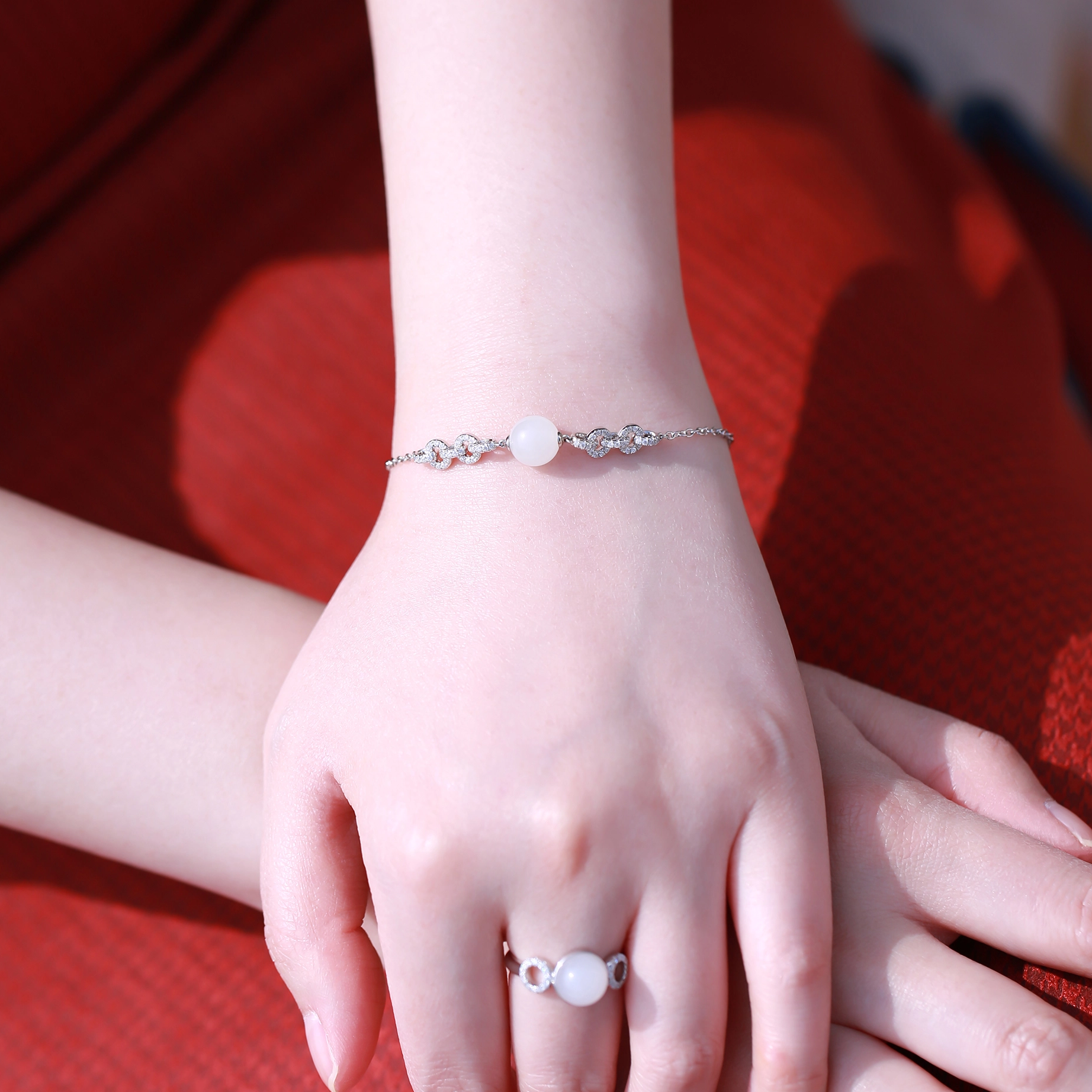
In contrast, artisans assemble a jade bracelet using multiple individual components. These pieces usually feature polished spherical beads, carved cylinders, or metal-linked cabochons. Craftsmen commonly string these stones on durable elastic cords. High-end variations often use silk thread finished by precious metal clasps. This segmented construction allows for fluid wrist movement. You can easily remove or adjust the piece throughout the day. It bends naturally around your arm. This flexibility eliminates the severe sizing restrictions associated with solid loops.
Feature | Solid Bangle | Flexible Bracelet |
|---|---|---|
Primary Material Format | Single continuous stone | Segmented beads or links |
Structural Flexibility | Zero give or stretch | Highly adaptable |
Common Profiles | Round, Ping An (flat inner), Guifei (oval) | Spherical, cylindrical, cabochon |
Fastening Mechanism | None (slides over hand) | Elastic cord, metal clasp, sliding knot |
Your daily environment heavily influences which design will serve you best. Jewelry should complement your lifestyle, not complicate it. Let us examine how each style performs under standard daily conditions.
You must assess the impact of frequent desk work. Modern professionals spend hours typing on keyboards. Rigid bangles often clank against desks and laptops. This constant striking causes distinct wearer annoyance. More importantly, it risks causing micro-abrasions to the stone over time. The solid loop protrudes from the wrist, catching on edges easily.
Flexible bracelets solve many of these ergonomic challenges. They sit nearly flush against the skin. Segmented beads roll naturally under your wrist while you type. They offer superior comfort for manual tasks. If you prefer the rigid loop, consider a practical implementation strategy. Right-handed individuals often wear their piece on the left wrist. This simple adjustment mitigates daily impact risks significantly.
Jade ranks highly for toughness on gemological scales. It resists chipping exceptionally well. However, structural physics change the durability equation. A solid loop acts as a rigid lever. A hard, localized strike against a heavy doorframe can cause it to shatter instantly. The force has nowhere to dissipate.
Conversely, a segmented design diffuses mechanical impact. The elastic cord or metal linking absorbs sudden shocks. The primary failure point becomes the string or clasp itself. You can easily re-string a broken cord for a few dollars. This mechanical flexibility protects the individual precious stones from catastrophic breakage. You preserve your investment far better during accidental impacts.
Pricing disparities between these styles often confuse new buyers. You might see identical stone colors carrying wildly different price tags. The secret lies entirely in material yield and rough stone usage.
A premium Hetian jade bangle always commands a high price. Crafting one requires a large, continuous section of flawless rough stone. The carver must find a slab entirely free of internal fractures or unsightly inclusions. Cutting a massive circle from a square block generates significant waste. You pay for both the finished piece and the discarded surrounding material.
Beads and smaller links utilize the raw material much more efficiently. Carvers shape them from high-quality offcuts. They isolate pristine nodes within heavily fractured rough stones. This efficient yield lowers the barrier to entry. You can access premium colors and high translucency at a fraction of the cost.
Collectors view these two formats differently. Solid loops generally hold higher resale and heritage value. The sheer rarity of large, flawless raw material ensures strong market demand. True collectors hunt for impeccable, continuous circles.
Alternatively, a nephrite jade bracelet offers a highly accessible entry point. You secure top-tier stone grades without paying the inherent "rough waste" premium. It provides exceptional daily wear value. While it might not fetch auction-house resale prices, it delivers genuine aesthetic beauty economically.
Incorrect sizing accounts for the vast majority of purchase returns. The two styles demand completely different measuring protocols. Understanding this physical reality prevents costly shipping mistakes.
Bangle sizing completely ignores your actual wrist size. The widest part of your hand dictates the required diameter. Your knuckles determine whether the piece will fit. Putting on a properly fitted rigid loop requires physical effort. It involves temporary compression of the hand.
Follow these specific steps for accurate rigid sizing:
Tuck your thumb tightly across your palm toward your pinky base.
Wrap a flexible measuring tape around the widest part of your knuckles.
Pull the tape tight to compress the skin slightly.
Record the circumference in millimeters and divide by 3.14 to find your ideal inner diameter.
Wearers often use plastic bags or soapy lotion to slide the piece on. Once properly seated over the knuckles, it should not easily slip off. A loose fit risks accidental shattering during daily movement.
Segmented designs remove all sizing stress. They rely strictly on basic wrist circumference. You simply wrap a tape measure around your wrist bone. Most designs include elastic cords or adjustable clasps. This flexibility makes them highly forgiving. They represent the perfect choice for gifting when you lack the recipient's exact hand measurements.
East Asian cultures attach profound spiritual meaning to this gemstone. The specific shape you choose alters the traditional symbolism. Understanding these heritage contexts enriches your ownership experience.
Solid loops carry tremendous cultural weight. Traditional Feng Shui principles revere the unbroken circle. It represents eternity, continuous energy flow, and spiritual protection. Parents traditionally gift these pieces to daughters entering adulthood or marriage. The continuous stone symbolizes a shield against negative energy. It promises wholeness and enduring harmony for the wearer.
Cultural practices strongly dictate wearing this gemstone on the left hand. This tradition stems from a dual rationale. Energetically, traditional medicine places the left wrist closer to the heart meridian. Wearers believe the stone absorbs and purifies energy flowing to the heart. Practically, it offers excellent protection. Most people are right-handed. Placing the delicate heirloom on the non-dominant left side keeps it away from high-impact daily activities.
You now understand the structural, financial, and practical variables. The final decision depends on aligning these realities with your personal expectations. Use the following framework to confidently narrow down your selection.
You seek a traditional heirloom carrying generations of cultural symbolism.
You are fully willing to measure your knuckle span precisely.
You can comfortably endure the temporary compression required for fitting.
Your budget readily accommodates the premium markup for a flawless, solid block of stone.
You can commit to mindful daily wear, avoiding heavy impacts.
You prioritize the energetic and aesthetic properties of the gemstone over strict traditional forms.
You desire the ergonomic comfort required for modern office work and typing.
You prefer easy, instant removal before gym sessions or heavy manual tasks.
You want to maximize your budget for top-tier color rather than raw material size.
You are gifting a stunning piece from a Hetian jade collection without knowing the recipient's exact knuckle measurements.
Your choice ultimately hinges on one primary question. Do you prioritize traditional continuity or adaptable comfort? Rigid pieces offer unbroken elegance and powerful symbolism. They demand careful sizing and mindful wear. Segmented designs deliver flexible ergonomics and exceptional value. They easily adapt to active modern lifestyles.
Both styles strongly validate your appreciation for this magnificent gemstone. They highlight its renowned durability and soft, glowing luster. We encourage you to weigh your daily routine against your aesthetic desires. Explore reputable sellers who transparently disclose stone treatments. Browse specific, certified collections carefully. Always verify authenticity and professional grading before you finalize your purchase.
A: Traditionally, bangles are worn on the left wrist. This aligns with cultural beliefs regarding energy flow to the heart and offers practical protection for right-handed individuals by keeping the stone away from high-impact activities.
A: Yes. A properly fitted bangle should require some effort (and often a lubricant like soap or a plastic bag) to slide over the knuckles. If it slips on too easily, it is at risk of sliding off and shattering during wear.
A: Generally, yes. Because a solid bangle requires a much larger piece of flawless rough jade, it is rarer and inherently more valuable than beads, which can be carved from smaller fragments of the same quality stone.


